Look Inside
This is what's actually in there.
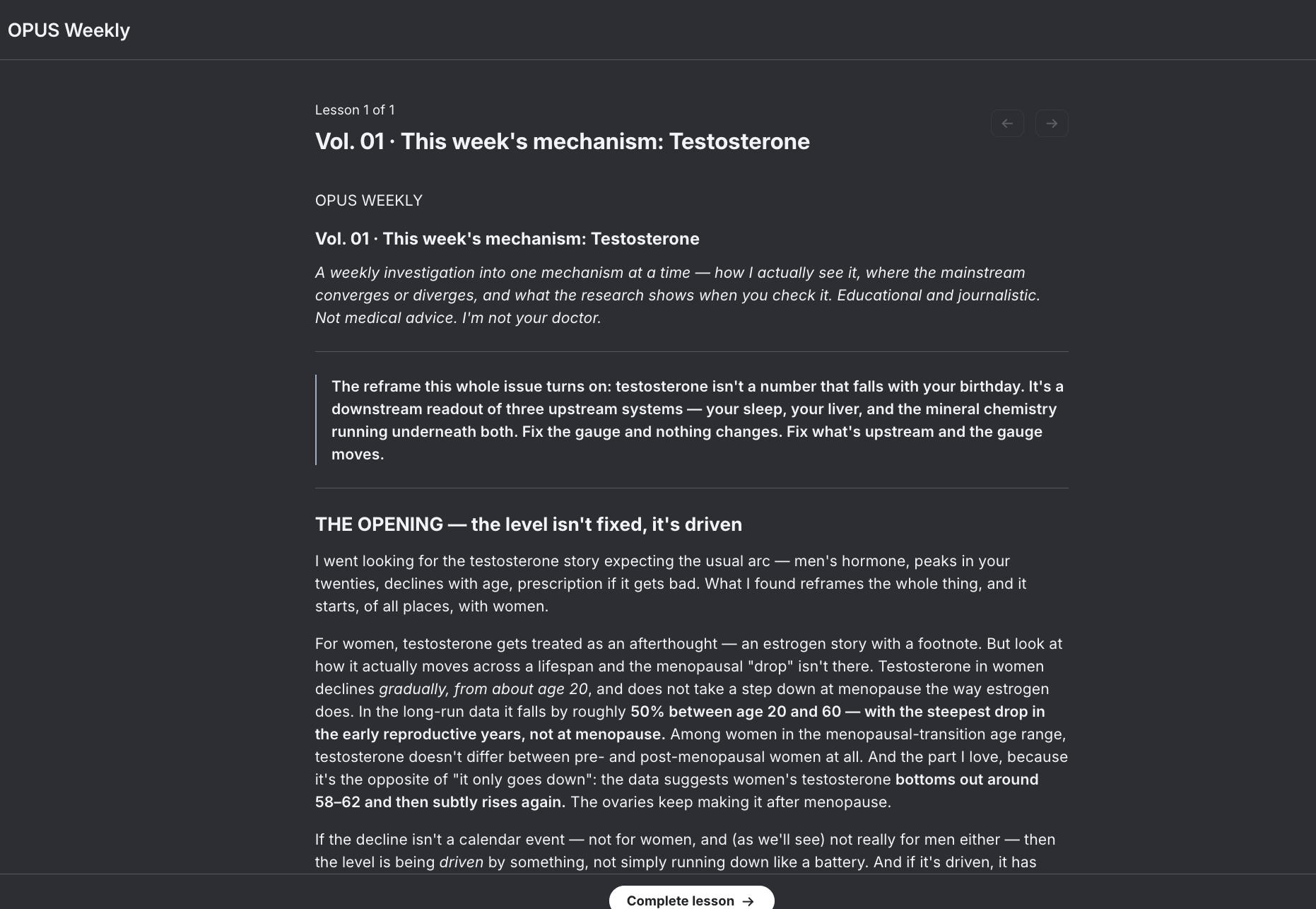
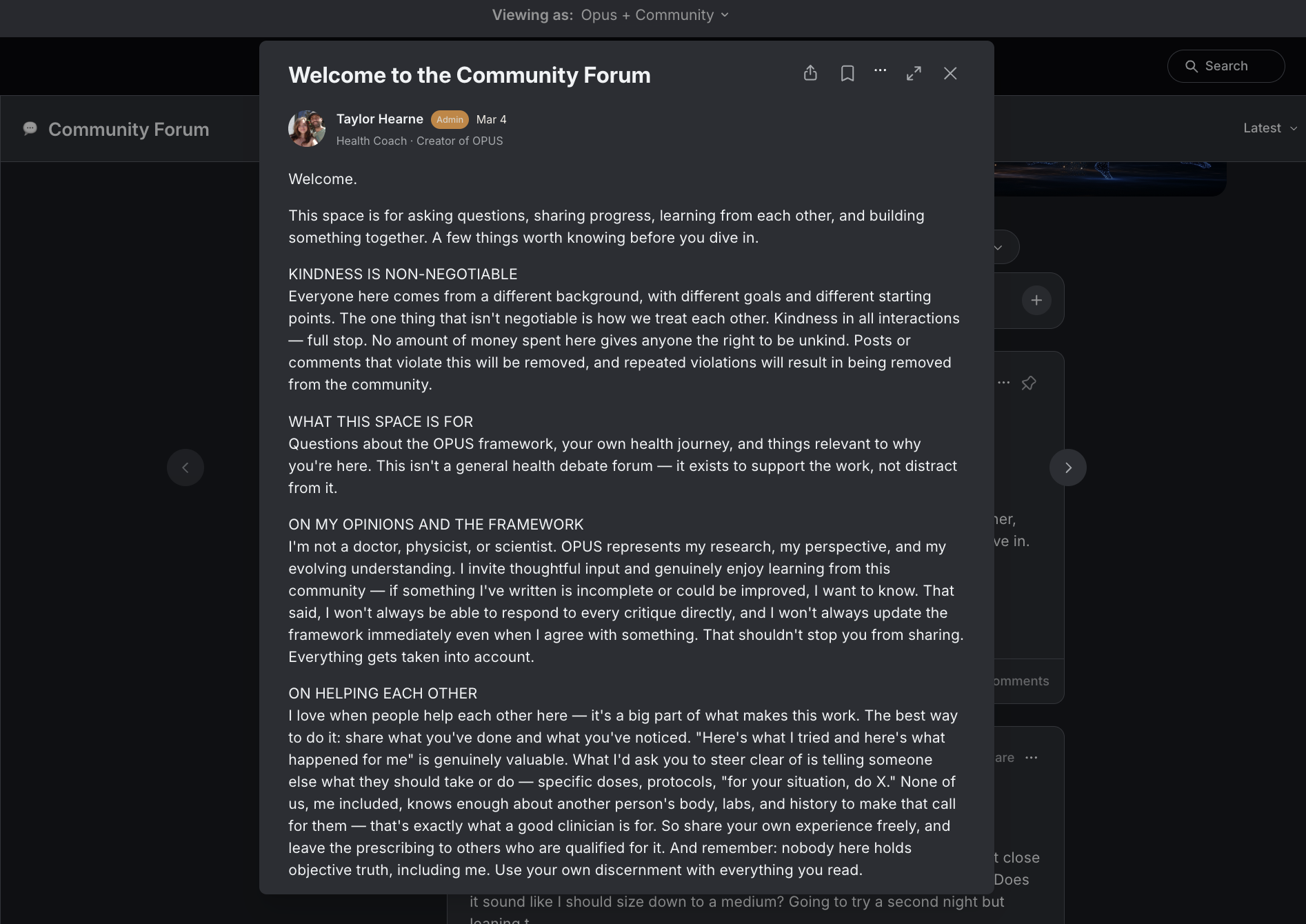
No mockups — real pages from inside OPUS, exactly as they are right now. Tap any to look closer.
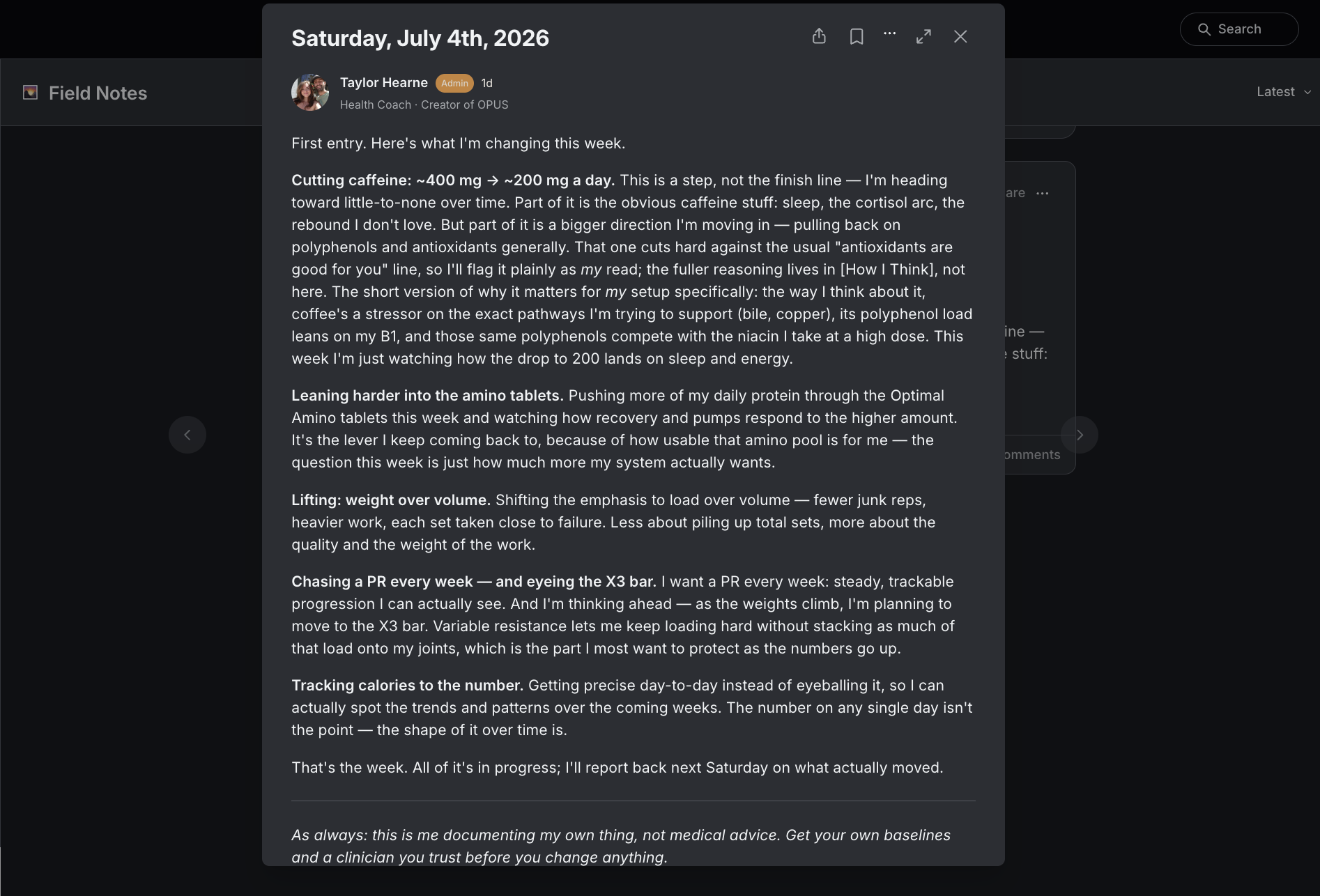
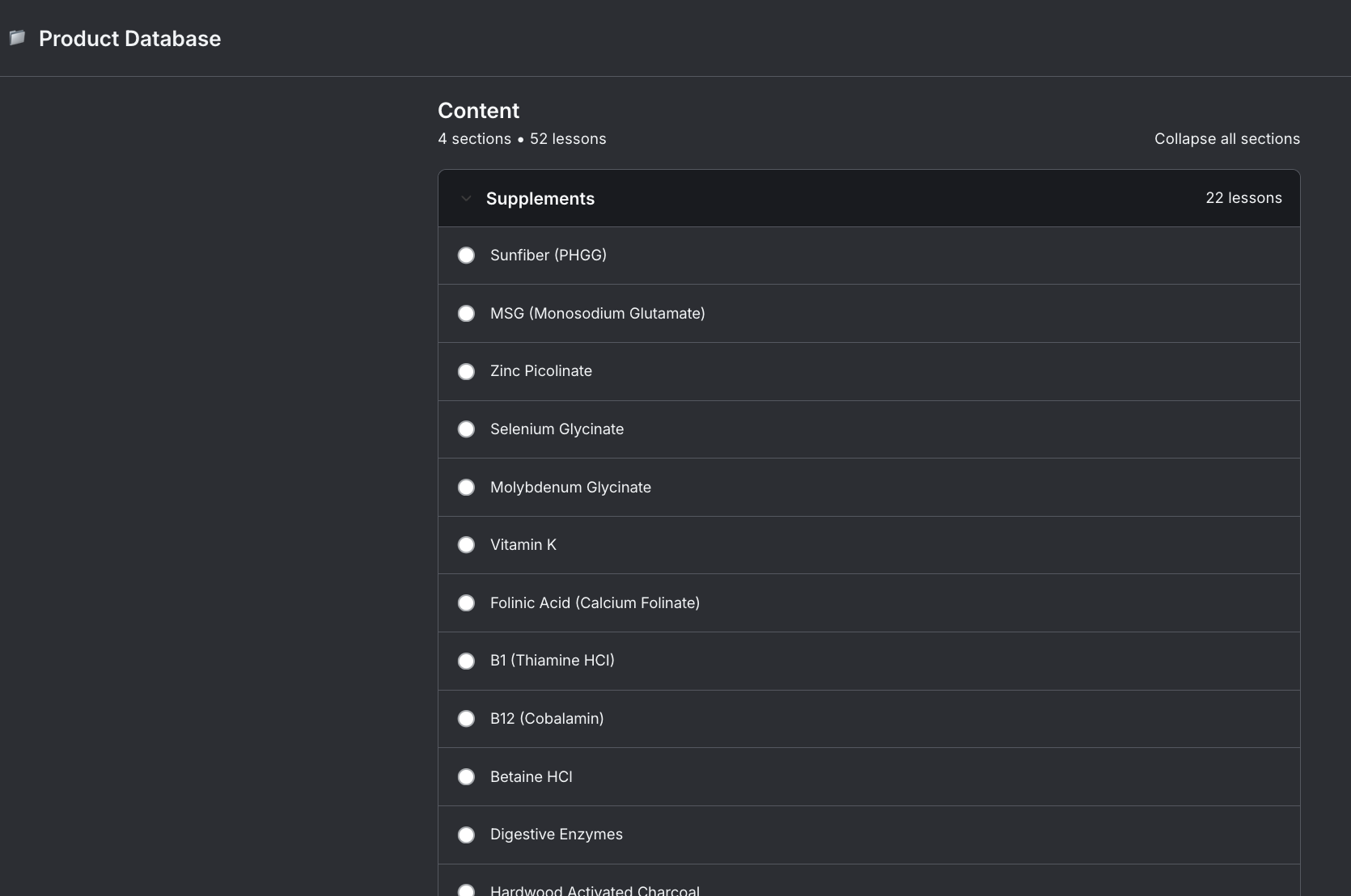
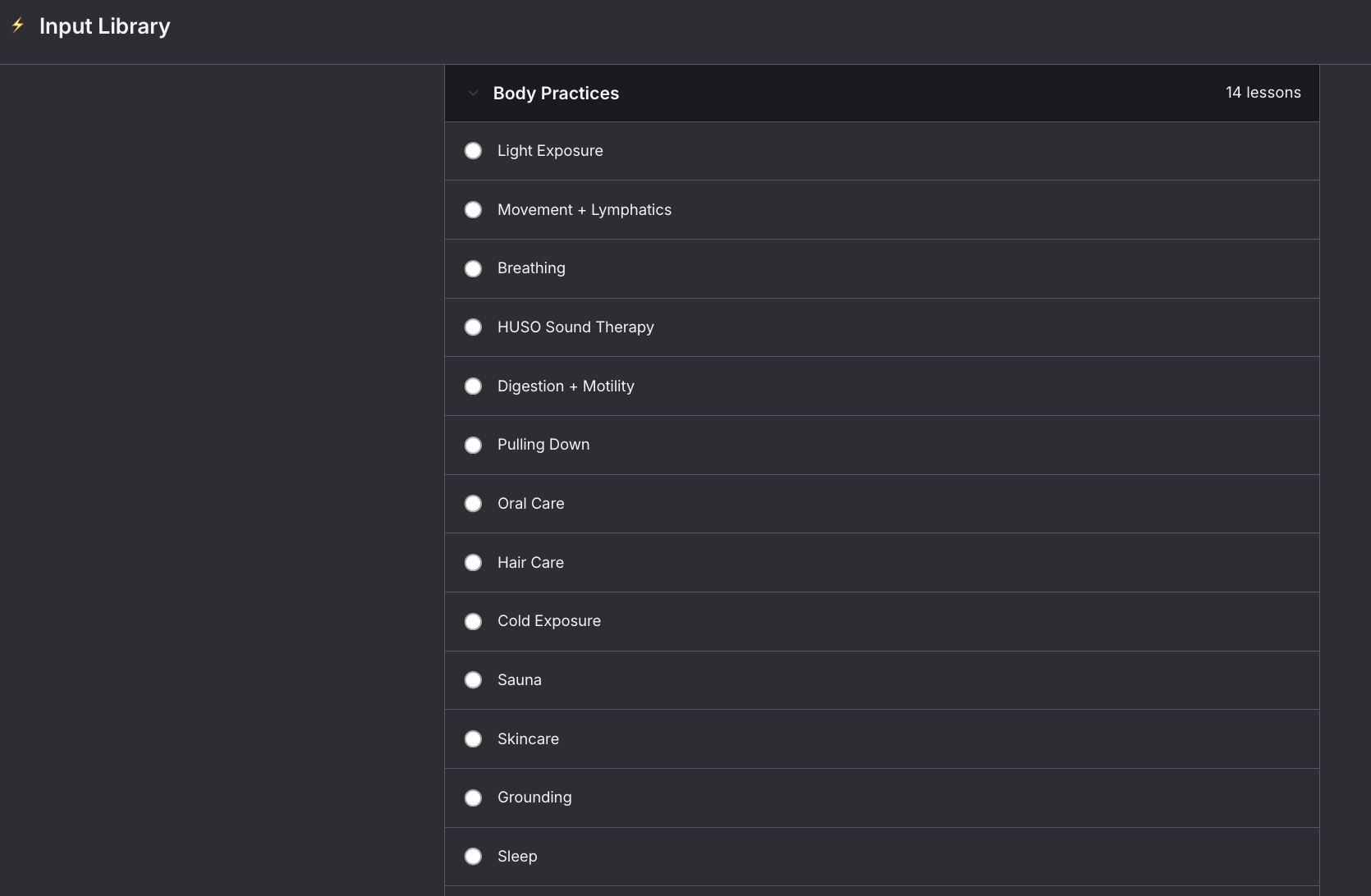
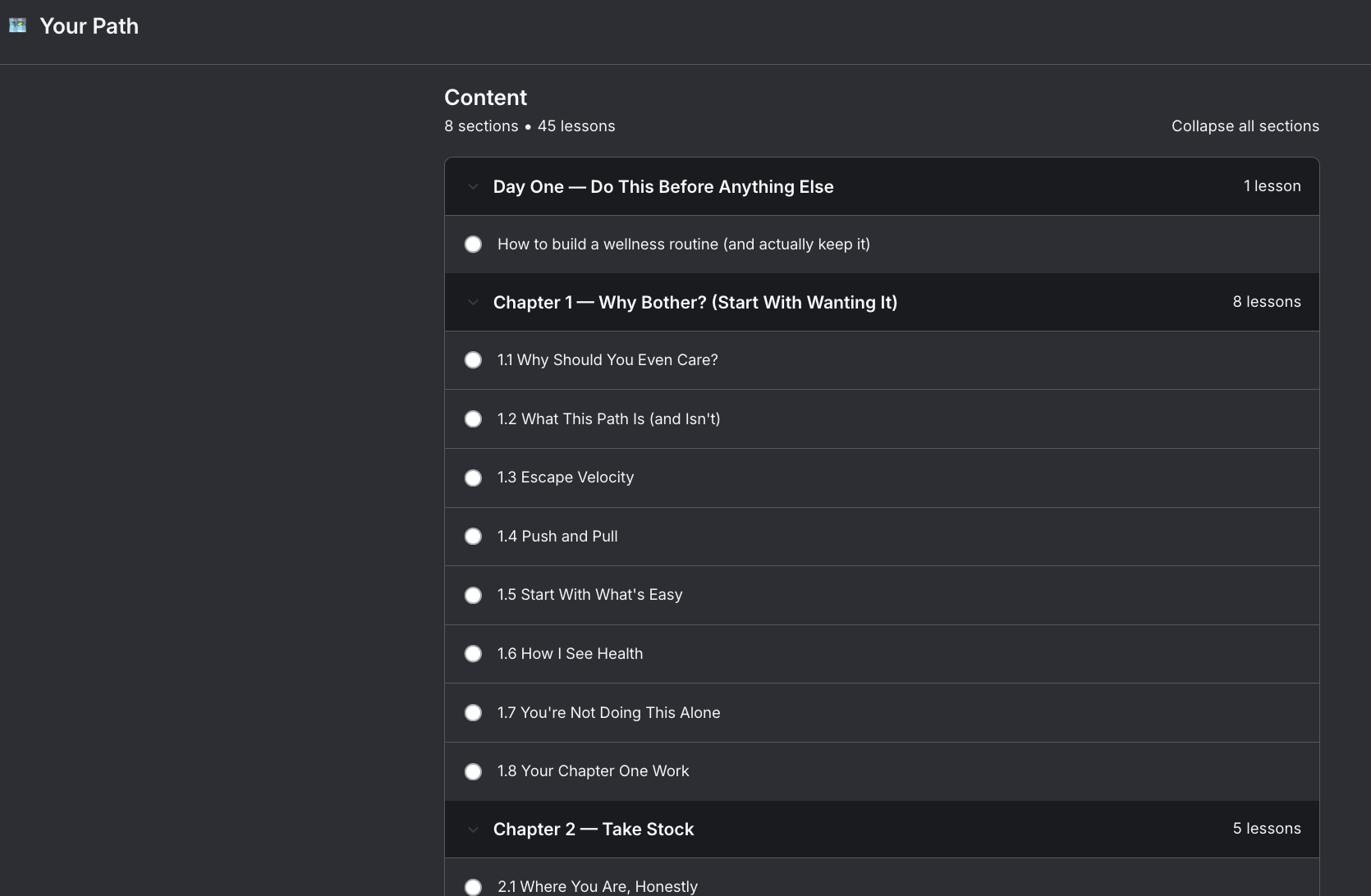
← scroll to flip through →
OPUS — a real-time health publication
What actually changes your skin, energy, and body is the biochemistry underneath — how it all actually works. I dig into the research, test it on myself in the open, and report what holds up: the foods, the supplements, the training, and the why. Plus a community doing it with you, and a direct line to me.
One membership · everything included · $14.99/mo · cancel anytime
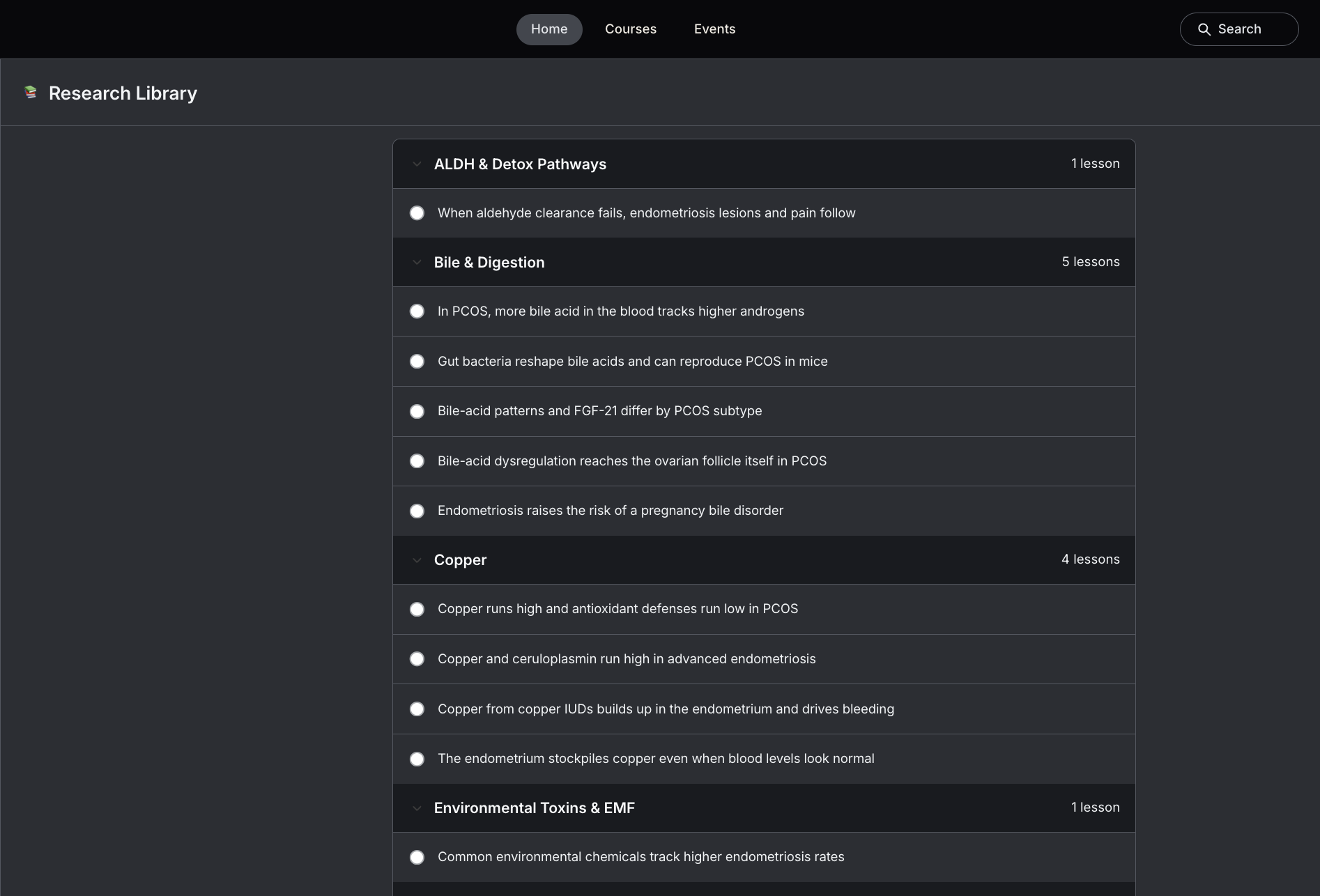
Nearly 350 entries across these — and the Research Library adds 242 more. This is the real index, exactly as it's listed inside OPUS.
Every input that shapes how you look and feel — food, light, air, movement, compounds. What each one does, and how to use it, is inside.
Every product I actually use — and nothing I don't. Why each one, over all the others, is inside.
Every recipe by name, every meal handled. The ingredients and the method for each is inside.
The model your whole body runs on, piece by piece. What each one means — and why — is inside.
Why you do what you do — and how to change it without willpower. The whole book is inside.
Exactly where to start and what comes next, from day one. The whole path is inside.
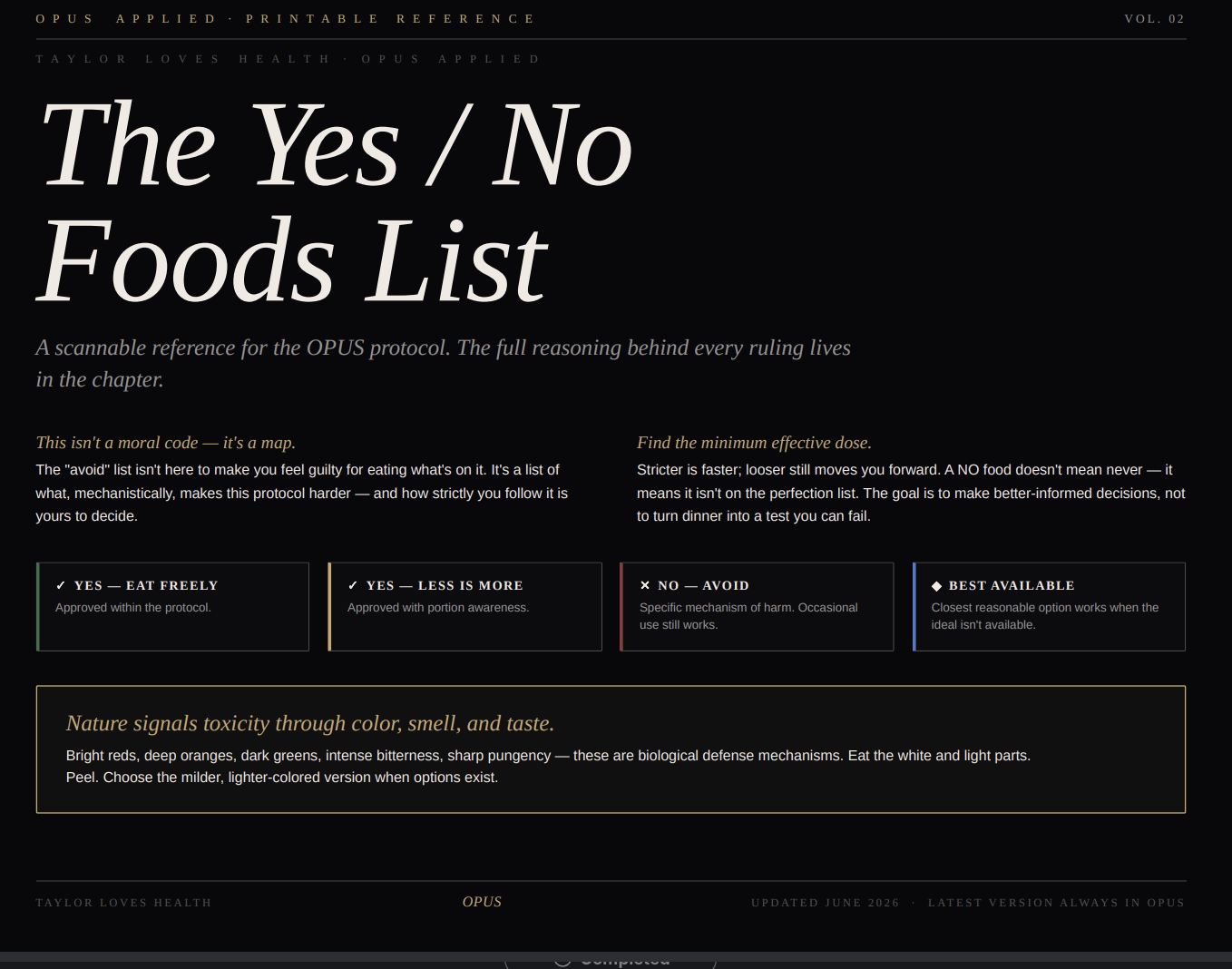
Every food it covers. The yes / no on each — and the why — is inside.
When you join, you get access to all of it — and the newest work is always the most current, because I'm adding to it as I go.
One membership. All of it. Always growing.
No mockups — real pages from inside OPUS, exactly as they are right now. Tap any to look closer.
My sister was 26 when she was diagnosed, 27 when she died. She seemed completely healthy — no signal, no warning. I've never been able to look away from it. Not because it made me afraid of dying — because it made me refuse to waste being alive. She doesn't get any more of it. I do. That's the whole reason I do this.
Five years. Thousands of hours. The answer wasn't in any one field — it was in the space between them. Dynamical systems, biogeometry, biomechanics, liver physiology, biochemistry, chronobiology, toxicology — among a dozen others. Nobody was connecting these. That's the gap OPUS fills.
The first signal was in me — more energy, more stamina, habits I'd carried for a decade starting to loosen. Not through willpower. Through finally understanding what was actually going on underneath.
So I started posting what I was learning. That turned into thousands of conversations with people all over the world — and every question, every bit of pushback, sharpened the thinking a little more.
OPUS is where all of that lives now — the entire framework in one place, still growing as I keep learning.
Most health content sells you a finished program — twelve steps, buy this protocol. I do the opposite, two ways: I run the experiment on myself, out loud — what I eat, how I train, what's in my stack, what I'm testing now — and I report the mechanisms behind it, going to the primary research and saying so when the evidence is thin. The experiment and the reporting, in one place.
I won't tell you what to do with your body — I don't know it, and I'm not qualified to. What I can do: show you how I approach my own health, hand you the same tools and papers I use, and put you in a room full of people doing the same. What you do with it is between you and your own practitioner.
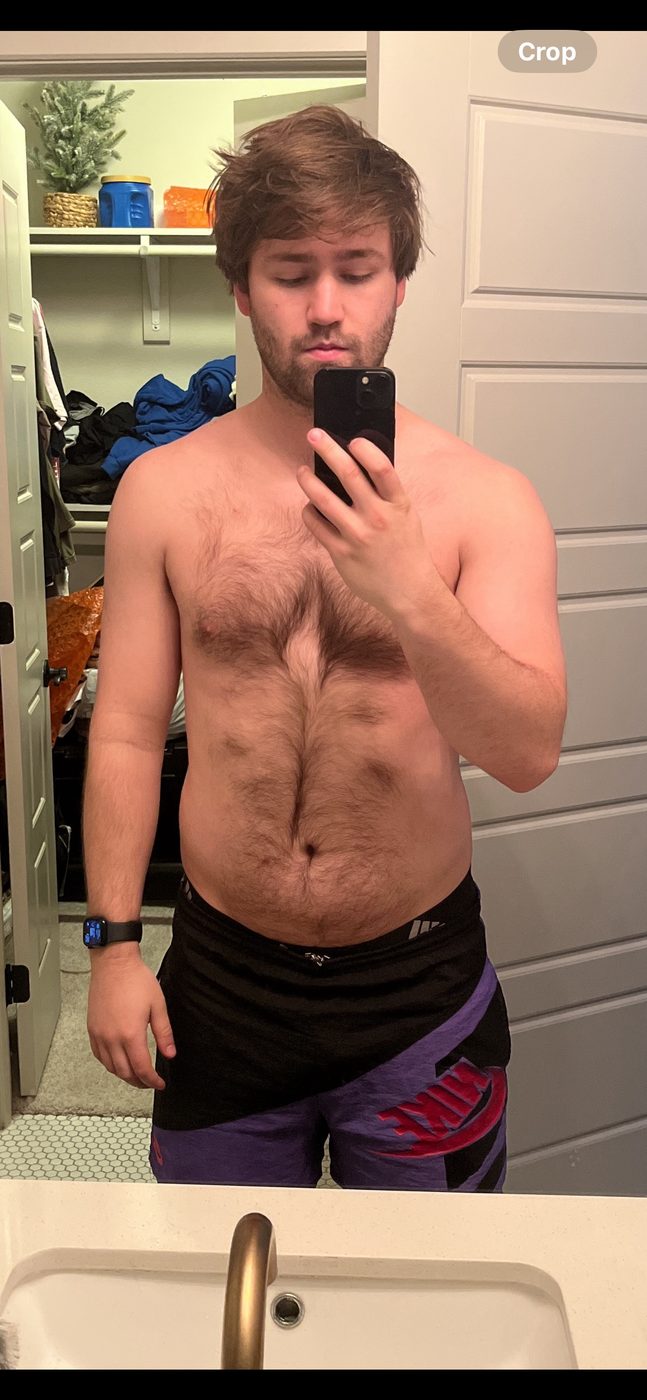 Then
Then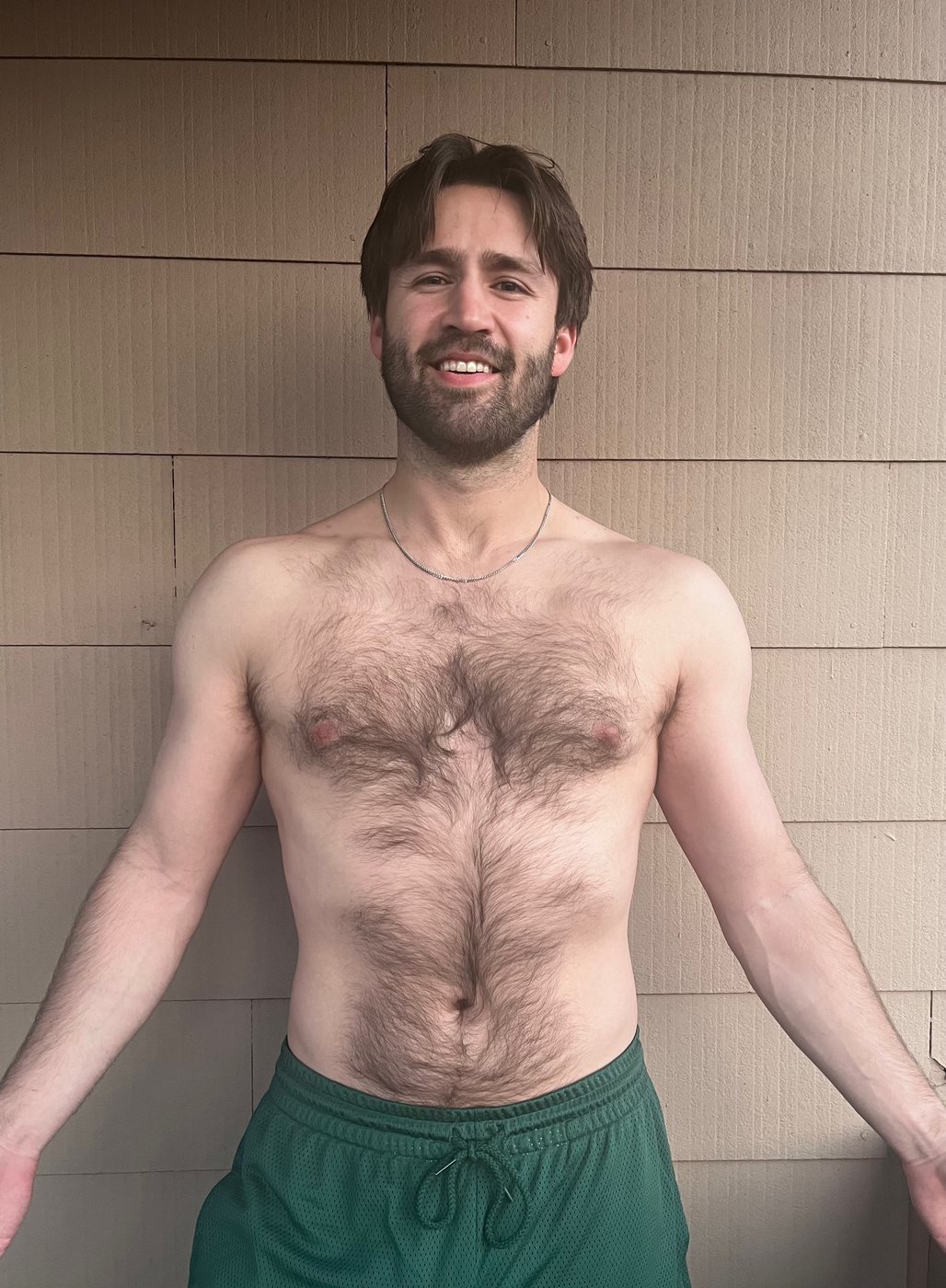 Now
NowA couple of years ago I couldn't really work. I was deep in addiction, depressed, self-sabotaging — with cystic acne bad enough to put me on Accutane, and no energy for my own life. I never expected to become someone who paid attention to health. The photo on the left is that guy.
The one on the right is where paying attention got me. I'm not jacked, and I'm not pretending to be — but I'm about five times stronger than I was, with energy across the board I didn't know I was missing. And the change that encourages me most isn't even in the photo: I stopped feeling bloated and wiped out all the time, and I got my life back. The mirror was never the point — and I plan to keep going.
That's what I want other people to feel. This is only a couple of years in — the beginning, not the end, and I think the best is still ahead. So I do all of it in the open: come do it with me.
Everything I learned is inside OPUS.
Join thousands of people who stopped guessing.
See Pricing →Cancel anytime — no questions asked.
I go to the primary research and show my sources at full strength — not cherry-picked. I tell you where I disagree with the mainstream, and where it disagrees with me. Where the evidence is thin, I say so. I send you to get bloodwork and a clinician, constantly. And I document myself instead of prescribing to strangers. That's the standard — and it's why people stay.
"In just three months in OPUS, my whole life feels like it's changed for the better. I'm getting more done at work than ever, I've made real progress at the gym, and I still have energy left over for my kids."
"There's something really comforting about how transparent and relatable Taylor's work is. It's inspired me to try in areas of my health where I used to just self-sabotage because I didn't know what to do next."
"I started following Taylor's approach earlier this year, and I've never felt more hopeful about my health. Between the yes/no foods list and better daily habits, I feel more energetic and taken care of than I have in a long time — and for the first time, I don't feel like feeling bad is just something I have to accept. So grateful for everything I've learned. Thank you, Taylor."
"The community in OPUS has truly changed my life. Every time I open the app and see people sharing, I feel encouraged."
"Taylor talks about health in a way that's straightforward but also really comprehensive. OPUS has given me the tools to improve my wellness routine."
"The guides and information in OPUS have been so useful for putting together a plan for me and my family. It's already helped all of us feel more energetic and happier."
"The OPUS community is great and genuinely fun to be part of. It motivates me to make a little change every single day."
"The yes/no foods list has honestly saved me. I used to eat out constantly and feel overwhelmed by all the options — now I've got something manageable I can actually stick to when I cook for myself, and it's made a real difference."
"I'd tried all kinds of things and nothing ever stuck. Taylor's approach is the first thing that's actually made a difference for me, my skin included. I'm so excited."
Individual experiences shared by members. Nothing here is medical advice, and none of it is a promise of results — OPUS is educational, and everyone is different.
I didn't name it OPUS by accident. An opus is the thing you give your life to — and that's what this is for me. I'm in it every single day, adding to it and sharpening it. I believe it's the best, most honest health resource on the internet, and I'm not being modest about that: I've poured everything into it.
The honest pitch: if you actually use it — open-minded, all in — I think it changes your life more than you can picture from the outside. I can't promise that for you; it's what happens when you do the work. If you're ready, this is the place.
Start today →$14.99/month · cancel anytime, no questions asked.
Because it works at the root — the biochemistry underneath — the same reporting moves the needle whether you're a competitive athlete or you just want clearer skin. Different goals, same underlying system. But that only matters if you actually want to understand it.
You want a simple PDF that hands you a checklist so you can think about it as little as possible. This isn't a list of rules to follow, and I'm never going to tell you exactly what to do with your body.
You actually want to change your lifestyle — and your life — and get more results with less of your time, money, and energy. You'd rather understand why something works than take it on faith.
Everything here is one person's reporting and experience, not medical advice — what you do with your body stays between you and your own practitioner.
No tiers to weigh, no upsells. One price, and you're all the way in.
All of OPUS, the community, and the weekly live Q&As — everything Taylor makes, in one place.
Less than a single bottle of supplements.
No-questions refund — if OPUS isn't what you needed, email me and I'll refund you. — Taylor
An investment in the one thing everything else runs on. Understanding your own body shouldn't be a luxury.
Cancel anytime — no questions asked. · Clear billing disclosure at checkout.
You don't need to know anything going in. Your Path walks you from zero — what to test, how to find a practitioner you trust, and how to change one thing at a time without overwhelming yourself. Most people start there.
Same thing for you. OPUS is what you're paying for — the framework, the foods list, the community. Circle is just the app it runs on, the same way Spotify runs on your iPhone. When you sign up, you'll set up a free Circle login. Download the Circle app on your phone, log in with that email, and you're inside OPUS.
Most members prefer the app — the search pulls up anything in OPUS instantly. We recommend it over desktop.
OPUS is a comprehensive physical health framework built around understanding how your body works as a system — not just what to eat or how to exercise, but why your body is doing what it's doing and what it actually needs. It's two things at once: Taylor's real-time experiment on himself, and honest reporting on the mechanisms — sources shown, evidence weighed, nothing hyped. Delivered as written content with diagrams inside a Circle community, updated continuously as the work evolves. Read it on the web or in the Circle mobile app.
Not at all. OPUS is for anyone who wants to understand their body better — whether you're an athlete fine-tuning, someone who senses something's off and wants to know why, or just curious about how it all works. The framework is the same regardless of where you're starting.
No. OPUS is educational content — Taylor is not a doctor, not a licensed clinician, and not a coach. Nothing here is medical advice, diagnosis, or treatment. Always consult a qualified healthcare provider for medical concerns — especially if you have an existing condition, are pregnant, or take prescribed medications.
$14.99/month — one membership, everything included: all of OPUS, the community forum, and the weekly live Q&As with Taylor (Thursday nights). No tiers, no upsells, no coaching add-ons. Cancel anytime.
Yes — cancel anytime, no questions asked, directly from your account settings.
Email me at the address in the footer and I'll refund the most recent month, no questions asked. The guarantee is good for 30 days. I'd rather refund someone than have a subscriber who isn't getting value.
Every day, your body either builds on the day before or falls slightly behind it. Most people can't see which direction they're going — they just feel the result years later. This is the core of how I think about the body: making that direction visible.
The ascending helix isn't a peak state. It's a direction — continuously maintained, naturally compounding.
Signal → Ability → Flow → Formation. Each one does something distinct. Each one conditions the next. When they run in sequence, momentum compounds upward. When they don't, it compounds the other way.
The sequence reflects real physiological relationships — each turning corresponds to a distinct class of mechanisms the framework maps in detail. This is a conceptual model, not a clinical diagnostic tool.
When any of the four functions are depleted, the shape of your cycle changes. Click any state below to see the geometry shift — this is how the model makes those changes visible.
Every real change in the body runs on a curve, not a line. You put in the work for weeks and see almost nothing — and that flat stretch is exactly where most people quit, because it feels like it isn't working. Push past a certain threshold and it flips: the results compound, the habits carry themselves, and momentum does the work you used to have to force. Below that line you slide back to where you started. Past it, you break free of the pull. That's Escape Velocity — and the whole game is refusing to quit in the flat part, because the payoff isn't spread evenly along the way. It's waiting on the other side of the turn.
One Life
You get one life. The only real question is how much of it you're actually awake for. You can spend it half-there — managing a slow decline, running on caffeine, waiting to feel like yourself — or you can spend it building the opposite: more energy, more range, more of the stuff that makes being alive worth it.
That's what everyone in here is doing. Not chasing a number on a scale — chasing Escape Velocity: the point where sustained effort tips into momentum, and the results start compounding on their own instead of you forcing them.
700+ people who decided not to sleepwalk through the one shot they get. Come be one of them.
OPUS + Community — $14.99/month. Everything included. Cancel anytime, no questions asked.
If you're not ready for OPUS yet, this is a real starting point — not a lead magnet. Take what's useful.
A giant compilation of every research paper I've found interesting and use to decide what to do with my own health — organized and searchable. See the evidence for yourself.